Stop being the glue between tools
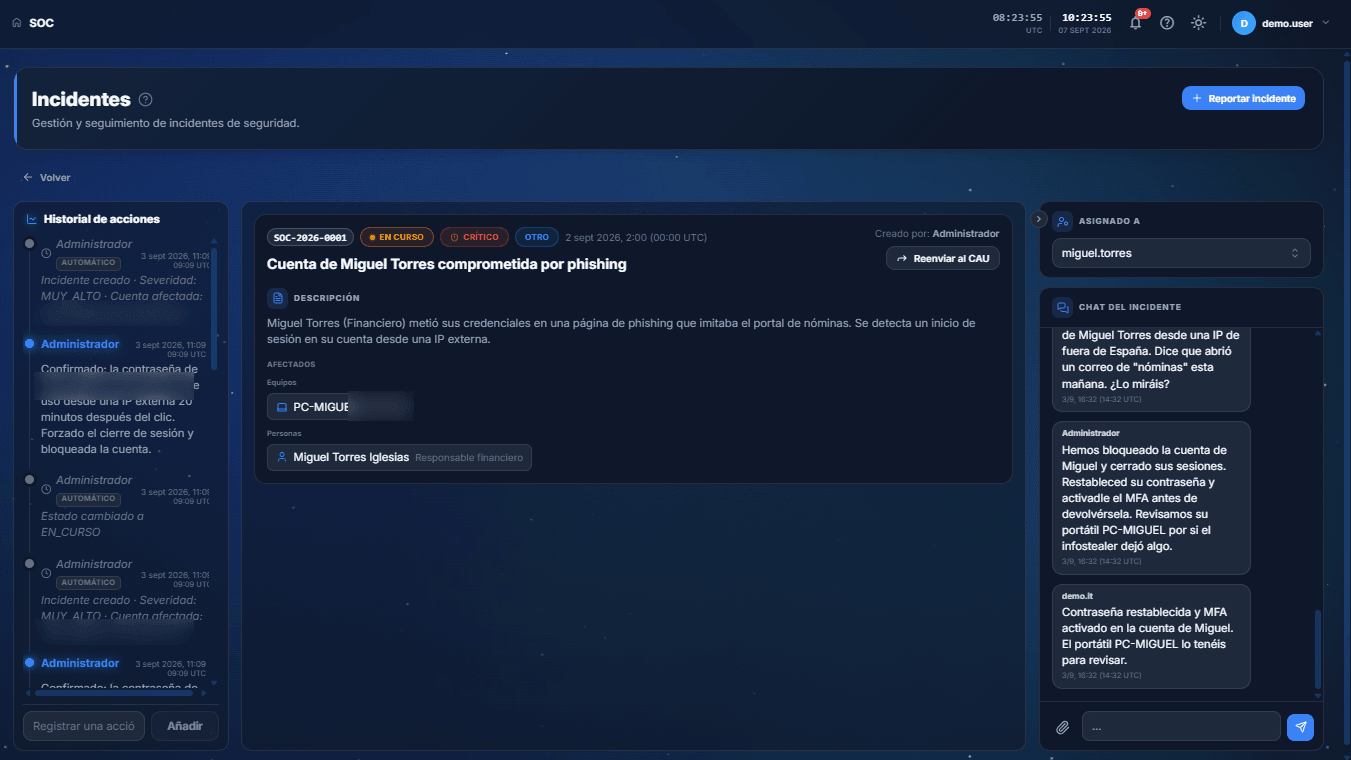
Every alert makes you open the EDR, then the inventory, then the scanner, then the ticket. The real work, deciding and containing, starts once you have already lost twenty minutes rebuilding the context. Cloud Fortress hands it to you already assembled.
What it solves
- Context
The alert arrives complete
Which asset, whose it is, what vulnerabilities it carries, what else has happened on it. All on the same screen you work in.
- Fatigue
Less noise, better order
Prioritisation by exposure and value lifts what matters and sinks what does not. The queue stops being a wall.
- Proactive
Grounded threat hunting
You go hunting over an inventory you know, not blind. What you find stays attached to its asset.
Capabilities you will use most
Frequently asked questions
Do I have to abandon my current tools?
No. Cloud Fortress gathers their context; you keep your EDR and your sources. What we remove are the jumps, not the tools.
Does it work for a small team running shifts?
Yes. The smaller the team, the more expensive manual work becomes, and the more you notice having it solved.
What can be attached to an incident?
Six classes of affected entity, with one shared selector across the whole platform: endpoints, people, groups, cryptographic keys, software and vulnerabilities. All of them come from the real inventory, so from any asset you can see every case that touches it.
Do a colleague's changes show up straight away?
Yes. The case chat, status changes and alerts arrive over a real-time channel and appear without reloading. It is what lets two analysts work the same incident without stepping on each other or asking each other over chat who is doing what.
Can I jump from an external detection to an incident?
In one click. An unauthorised change detected on the corporate website opens a SOC incident already written up, with the domain, the date and the text that appeared. Same with a dark web leak, which escalates to the SOC from its own record.
Let's look at it with your case on the table
30 minutes, a scenario close to yours and whatever questions you bring. No strings attached.