
Live asset inventory (and everything hangs off it)
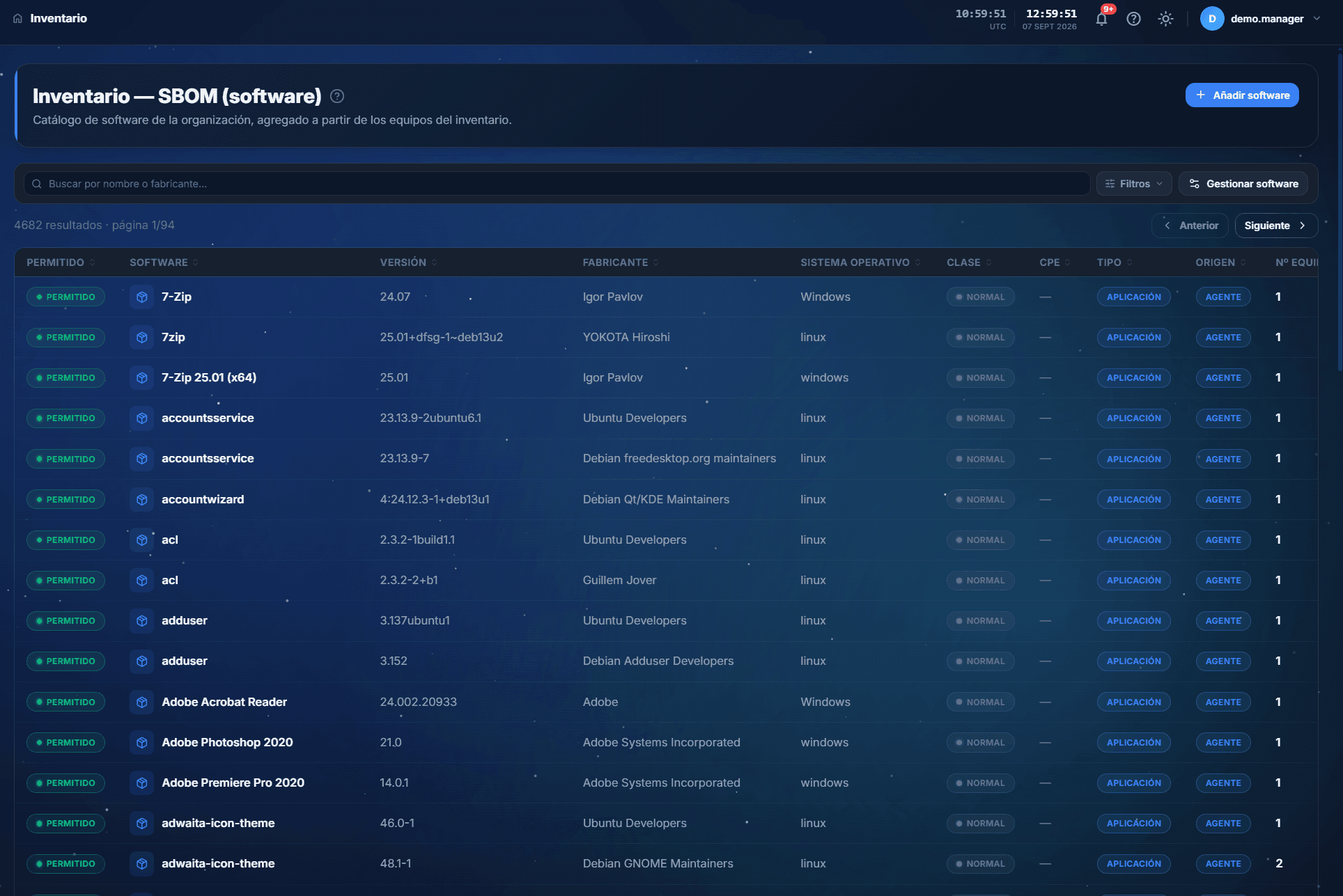
Endpoints, servers, software (SBOM), keys and algorithms (CBOM), people, projects and licences in one living list. It is the quiet foundation of cybersecurity and the backbone the rest of the Workspace hangs from.
You cannot protect what you do not know you have
The asset inventory is the living list of everything that makes up your surface: endpoints, servers, software and its components (SBOM/CBOM), people, projects and licences. It is the quiet foundation of cybersecurity, and also the most neglected, because doing it by hand is tedious and it ages badly. An out-of-date inventory is worse than none: it gives a false sense of control.
Shadow IT, the endpoint nobody registered, the app somebody installed, the licence that expired, is exactly where attacks come in. Every asset that is not on your list is a blind spot, and blind spots do not get patched, do not get monitored and do not show up in any audit until it is too late.
The backbone of the Workspace
In Cloud Fortress the inventory is not one more module: it is the backbone everything else hangs from. Every vulnerability, every alert, every leaked credential and every compliance control attaches to an inventory asset. That is why keeping it alive is not administrative housekeeping: it is what makes possible the correlation that gives the rest of the platform its point.
Cross-references with
Frequently asked questions
How is it kept up to date?
With agents deployed on the endpoints, bulk file upload or manual entry, so it feeds off your systems instead of depending on somebody editing it by hand.
Does it include software and its components?
Yes, with SBOM and CBOM: not only which applications you have, but what they are made of, which is what matters when a CVE turns up in a library.
What exactly goes into the inventory?
Endpoints and servers, installed software and its components (SBOM), cryptographic algorithms and keys (CBOM), the people in the workforce, groups, projects and licences. And it all links: from an asset you see every case that touches it, and from a case, every affected asset.
Why does the cryptographic inventory matter?
Because of what is called Q-Day: the day quantum computing breaks today's asymmetric cryptography. Knowing which algorithms and keys you use now is the only way to plan that migration without going in blind. Today the CBOM is populated by manual entry.
Can an employee see the inventory?
Only their own, and not from here: from their portal, which shows them the endpoints the company holds in their name. They do not see the rest of the workforce or the estate. Access level is assigned by role and, in Inventory, section by section.
See it running with your data in front of you
30 minutes with a scenario close to yours. No canned deck, no strings attached.